
UFO crash retrievals, from the famous Roswell incident to lesser-known cases, have been extensively documented by UFO researchers. This article delves into the mystery surrounding these events, presenting a comprehensive collection of testimonies. The revelation of the retrieval programs will be the key to unveiling non-human intelligence to the public.
In July 2023, David Grusch, a former U.S. Air Force intelligence officer, made headlines when he testified before the U.S. House Committee on Oversight and Accountability. The hearing centered on Unidentified Anomalous Phenomena (UAPs), the modern term for UFOs. Grusch’s testimony included explosive claims about the U.S. military’s recovery of extraterrestrial craft, efforts to reverse-engineer these advanced vehicles, and even the study of non-human remains. During his first public interview, conducted by Australian investigative journalist Ross Coulthart, Grusch was asked about the number of UAP crashes that had been retrieved. His reply: “Quite a number.”
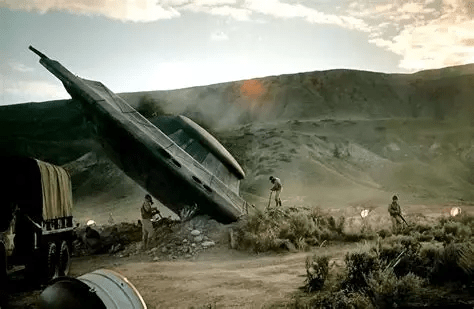
One of the first documented references to UFO crash retrievals appears in Frank Scully’s 1950 book, Behind the Flying Saucers. Scully, an American journalist, claimed to have access to high level insiders who revealed accounts of recovered flying saucers and the remains of extraterrestrial beings.
When it comes to UFO crashes, one of the most influential figures is Leonard Stringfield (1920–1994), a former military intelligence officer during World War II who later became a leading researcher in the UFO field. Over the years, Stringfield amassed an extensive collection of accounts related to UFO incidents. In May 1977, his book Situation Red: The UFO Siege was published. Shortly after its release, insiders and witnesses began reaching out to him with extraordinary claims.
At a conference, Stringfield was approached by a man who introduced himself as a former Army officer active in the early 1950s . The man, appearing well-versed in UFO matters, stated: “I’ve seen the bodies.” Using a map, he pointed to a location in the Arizona desert, which researchers later identified as the site of the 1953 Kingman UFO crash. The officer recounted what he had witnessed at Wright-Patterson Air Force Base in Dayton, Ohio. He explained, “I was in the right place at the right time when the crates arrived at night on a DC-7.” According to him, the shipment contained five crates, three of which held small humanoid bodies laid out on a fabric. The beings were described as roughly four feet tall, with large, bald heads, open eyes, small mouths, and almost nonexistent noses. They appeared to be dressed in tight-fitting dark suits.
This anonymous informant marked the beginning of Stringfield’s network of sources, paving the way for his later research into UFO crash retrievals.
Stringfield’s second informant was a man referred to as “Carl.” According to Carl, in 1973, while serving as a military policeman in the U.S. Air Force, he was summoned for a late-night mission under highly secretive circumstances. Blindfolded and driven to an undisclosed location, Carl recounted being led across a field of wet grass, up a flight of stairs, and through a long corridor. Upon arrival, he was given strict instructions regarding his assignment and stationed as a guard.
In the room where he was posted, Carl observed three small alien humanoid bodies stretched out on a table, closely examined by several ranking officers. The beings measured about three feet in height, with disproportionately large heads and creamy white skin. The eerie scene deeply unsettled Carl, leaving him visibly shaken and struggling to process the experience.
Another of Stringfield’s sources, referred to as “Dr. X,” claimed to have conducted autopsies on extraterrestrial bodies at a medical facility in the eastern United States. Dr. X described the beings as approximately four feet tall, with oversized heads, round, pupil-less eyes, small noses, and a complete lack of reproductive organs. Based on his observations, he speculated that the entities might have been artificially engineered, potentially some form of clones.
Additional information emerged from a military source who disclosed the existence of a so-called “blue room” within a highly secured facility. True to its name, the room was literally painted blue and housed an extensive collection of alien artifacts. These items were meticulously studied to determine their functions, with the goal of replicating their technology. The source also described four large aquariums filled with a pink solution, each containing the preserved bodies of beings with gray skin, oversized heads, large eyes, and no hair.
Another anonymous informant reported a similar account. He claimed to have seen nine alien bodies, each approximately four feet tall, stored at Wright-Patterson Air Force Base in 1966. He also revealed that a UFO craft was housed at the base and that mobile recovery units were always on standby, prepared to retrieve downed extraterrestrial vehicles at a moment’s notice.
In a parallel account from the 1960s, a contractor recounted witnessing seven alien bodies kept under strict security measures at Wright-Patterson AFB.
Stringfield also met with a radar specialist who had been stationed at Ft. Monmouth, New Jersey, in 1953. One day, he and a group of colleagues were escorted to a room where they were shown a film. The footage, shot at a desert location, depicted a large metallic disc that had crashed to the ground. Another segment showed lifeless alien bodies inside a tent. The officer overseeing the viewing offered no explanation, simply instructing them to “Reflect on that.” This footage was likely related to the Kingman crash mentioned earlier. A week later, an intelligence officer approached the radar specialist and revealed that the film was a hoax. The witness, however, came to believe that the entire exercise was a test, designed to assess the reactions and behavior of those who had seen the footage. He speculated that their responses were being evaluated for the potential selection of recruits.
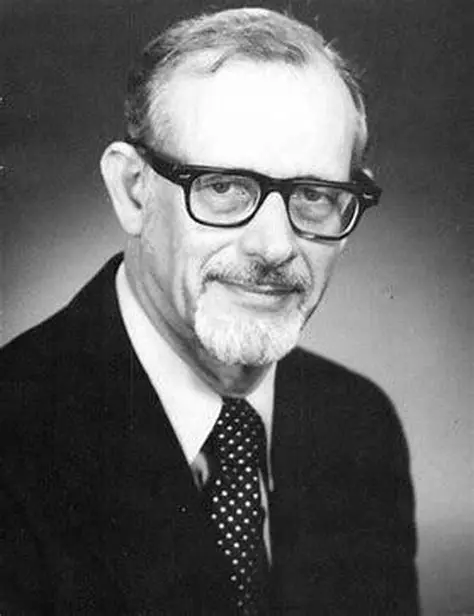
On July 8, 1947, Walter Haut, the public information officer at Roswell Army Air Field, issued a press release announcing that the military had recovered a “flying disc” near Roswell, New Mexico. However, just days later, in a press conference, General Roger Ramey, his chief of staff Colonel Thomas Dubose, and weather officer Irving Newton retracted the initial statement, claiming the debris was nothing more than pieces of a weather balloon.
In 1978, nuclear physicist and ufologist Stanton Friedman interviewed Jesse Marcel, the first military officer assigned to investigate the crash. Marcel, who had handled the debris firsthand, asserted that it was “nothing made on this earth.” He also believed the weather balloon explanation was a cover story. The 1980 book The Roswell Incident, authored by Charles Berlitz and William Moore, expanded upon Marcel’s account and introduced testimonies about alien bodies. From the 1980s through the 2000s, UFO researchers like Stanton Friedman, William Moore, and the team of Kevin D. Randle and Donald R. Schmitt conducted interviews with up to 90 individuals who claimed to have had direct or indirect involvement with the Roswell events. Many described a field strewn with metallic debris exhibiting unusual properties, while others reported discovering an oval-shaped craft and the bodies of small humanoid beings at a second crash site.
For a more in-depth exploration of these events, Witness to Roswell by Thomas Carey and Donald Schmitt remains the definitive work on the subject.
For more information, check out the book Witness to Roswell by Thomas Carey and Donald Schmitt, which is the definitive work on this matter.
It is believed that both the UFO and its occupants were transported to Wright-Patterson Air Force Base. Some witnesses even claim that a living extraterrestrial being was captured during the event. In their 2013 book Inside the Real Area 51: The Secret History of Wright-Patterson, Thomas Carey and Donald Schmitt gathered a comprehensive collection of sources suggesting that extraterrestrial technology and biological specimens are, or were, housed at Wright-Patterson.
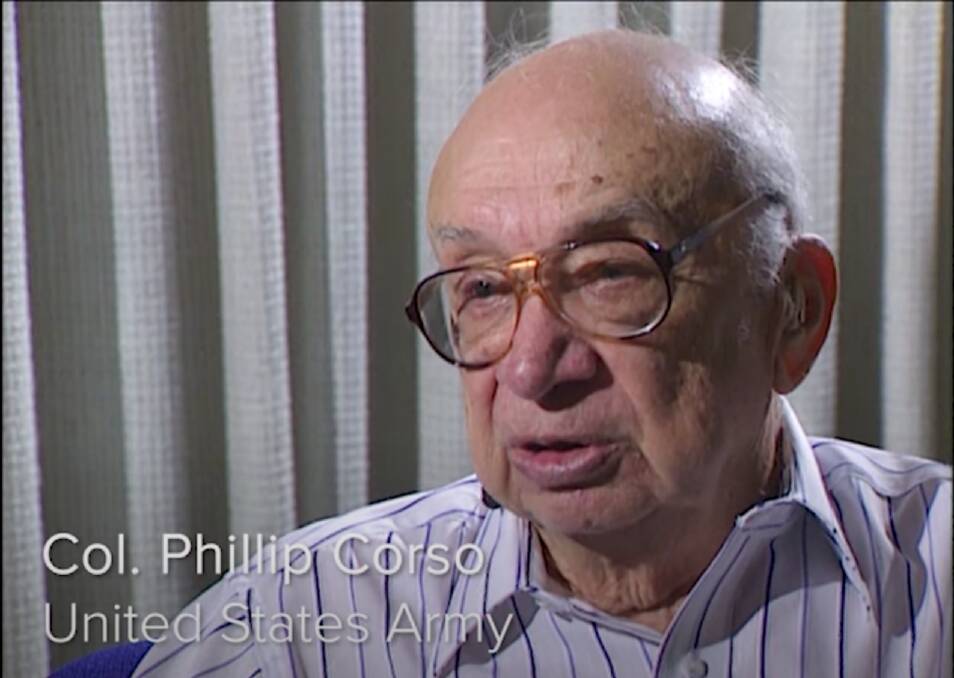
Philip J. Corso, a Colonel in the United States Army, served from February 23, 1942, to March 1, 1963. In 1997, he published The Day After Roswell, in which he confirmed the U.S. government’s involvement in the recovery and reverse engineering of non-human technology. Corso claimed to have first learned of the Roswell incident in July 1947, when he witnessed the transportation of extraterrestrial bodies to Air Materiel Command in Ohio.In 1961, Corso was appointed head of the Pentagon’s Foreign Technology desk within Army Research and Development, under Lieutenant General Arthur Trudeau. His role was to coordinate the reverse engineering of alien technology, distributing materials to various defense contractors. According to Corso, this initiative significantly accelerated technological advancements, indirectly leading to the development of fiber optics, lasers, integrated circuit chips, and Kevlar.
Robert O. Dean served as a U.S. Army Command Sergeant Major. From 1963 to 1967, he was stationed at Supreme Headquarters Allied Powers Europe (SHAPE), the military headquarters of NATO’s Allied Command Operations, located at the Château de Montreuil in the suburbs of Paris, France. One day, his superior handed him a report titled “The Assessment,” a NATO study on the alien presence on Earth. The document confirmed the recovery of downed extraterrestrial craft, specifically referencing the Roswell incident, and included supporting photographs. It also identified a dozen different species and groups involved in interactions with Earth. Years later, Dean claimed that inside sources revealed the existence of more than one hundred such entities.
Major Dean went on to become a renowned ufologist. In one of his statements, he declared: “I’ve learned that we are not merely alone. We have never been alone. We have had an intimate interrelationship with advanced extraterrestrial intelligences from the beginning of our history. And let me tell you that that intimate interrelationship is still going on.” Furthermore, he asserted that the biological evolution of the human species has been influenced by some of these non-human entities.
On May 9, 2001, over twenty military, intelligence, government, corporate, and scientific witnesses gathered at the National Press Club in Washington, D.C., to publicly reveal the truth about the UFO phenomenon and the cover-up orchestrated by government and corporate entities. This event was organized by the Disclosure Project, a group founded in 1993 by Dr. Steven Greer, a medical doctor at the time. The project’s archive of whistleblower testimonies includes claims related to UFO crash retrievals. Below are three key testimonies from this archive.
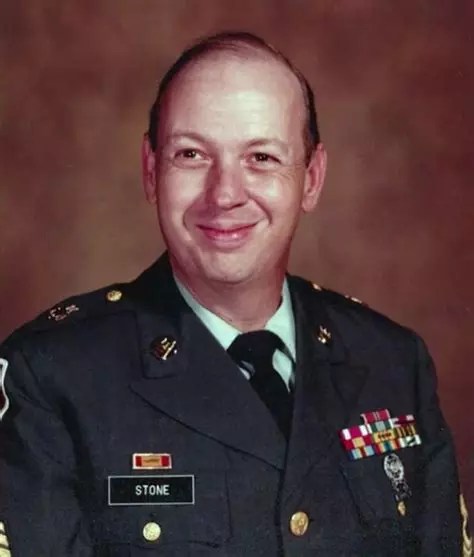
In July 1997, investigative journalist Paola Harris met Clifford Stone at the 50th anniversary of the Roswell Crash. She was among the first UFO researchers to interview him. Stone served in the U.S. Army for 22 years, from 1968 to 1990. A retired Sergeant, he was covertly recruited into an elite UFO crash retrieval unit, where he later participated in missions to recover downed UFOs. He received specialized training at a nuclear, biological, and chemical warfare facility at Fort McClellan, Alabama, before being assigned to regular army duties. However, he was later called upon to carry out crash retrieval operations as needed.
To substantiate his claims, Stone provided documents obtained through the Freedom of Information Act that revealed the existence of classified projects, such as Moon Dust and Blue Fly, which were designed to recover unidentified aircraft. One key document, an Air Force Intelligence letter known as the Betz Memo (1961), describes the Moon Dust project as having “the potential for employment of qualified field intelligence personnel on a quick reaction basis to recover or perform field exploitation of unidentified flying objects.” In 1979, Stone gained access to an “Extraterrestrial Biological Entities (EBEs) Guidebook,” which detailed information on 57 different types of extraterrestrial beings.
Former Apollo astronaut Edgar Mitchell (1930-2016), the sixth man to walk on the Moon, made several groundbreaking statements throughout his career. In a July 23, 2008, interview on Kerrang Radio, he revealed that he had received briefings from military and intelligence officials that confirmed the existence of extraterrestrial intelligences and the recovery of extraterrestrial crafts, including those from the Roswell incident.
Richard Doty, a counterintelligence officer with the U.S. Air Force Office of Special Investigations (AFOSI) in the 1980s, was assigned to a division focused on monitoring UFO and extraterrestrial activities. In the summer of 1979, Doty was inducted into a special access program (SAP) by an Air Force Colonel. The briefing began with a historical overview of the extraterrestrial phenomenon, starting with the Roswell crash, and included descriptions and photographs of several types of extraterrestrial biological entities (EBEs).
Below is a list of documented crashes, other than Roswell:
- Aztec (1948) New Mexico
- Kingman (1953) Arizona
- Las Vegas (1962) Nevada
- Kecksburg (1965) Pennsylvania
- Dalnegorsk (1986) USSR
- Varginha (1996) Brazil
The disclosure of such events continues to this day. On Saturday, January 18, 2025, NewsNation aired an interview with a U.S. Air Force veteran led by Ross Coulthart. Jake Barber, a former Tier One operator with a special forces unit, has had his credibility affirmed by several members of Delta Force. He claims to have participated in the recovery of a non-human craft.
In his interview, Barber recalls the night of the incident when he piloted a helicopter: “Our communication procedures were modified. Looking at the object on the ground, it was clear it was extraordinary and anomalous—it was not human. […] I got within 150 feet of the object. It looked like an egg, a white egg. There was no engine, no thermal signature. Having seen many things in my past, this was completely unlike anything I had ever encountered. […] Over the past few years, ranking members of the UAP Task Force have confirmed to me that what we were working on was NHI (non-human intelligence), and it wasn’t a unique experience.” Additionally, he revealed a fascinating video of the UAP.
I recommend the following books on the subject of crash retrievals:
- UFO Crash Retrievals: The Complete Investigation – Status Reports I-VII (1978-1994), by Leonard Stringfield.
- Majic Eyes Only: Earth’s Encounters with Extraterrestrial Technology, by Ryan S. Wood.
I encourage you to check out the work of Michael Schratt, a renowned UFO researcher and the top expert on UFO crash retrievals. He has a YouTube channel called “Michael Schratt”.
Lastly, If you’re interested in learning more about the cover-up of crashed UFOs and the formation of MJ-12, a secret UFO control group, I recommend reading this article: Robert Sarbacher, Eric Walker and MJ-12.
 UFO INDIGO