
Shrouded in secrecy and steeped in UFO lore, Area 51 has captivated imaginations worldwide. Often dismissed as a hub for conspiracy theories, this article delves into evidence suggesting a possible connection between the site and non-human intelligence.
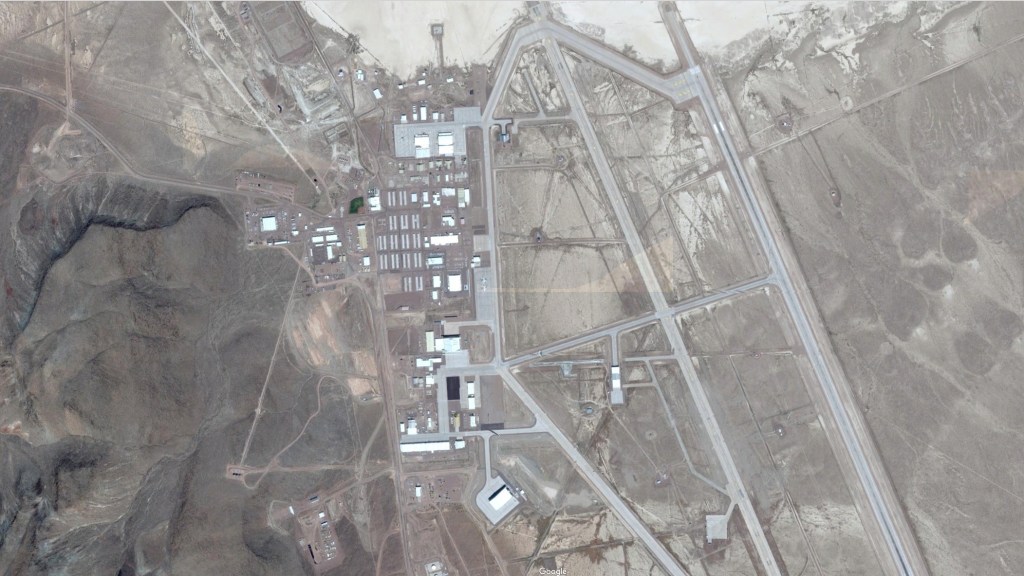
Area 51 is the widely recognized nickname for a highly secure U.S. Air Force installation situated in a remote region of Nevada, approximately 120 miles northwest of Las Vegas. It is located within the Nevada Test and Training Range and officially known as Groom Lake, named after the adjacent salt flat near its airfield. The site is also referred to as Homey Airport and has earned nicknames like “Dreamland” and “Paradise Ranch.”
The activities conducted at Area 51 are shrouded in secrecy, but it is believed to serve as a hub for the development and testing of experimental aircraft and advanced weapon systems.
A series of articles published by the Las Vegas Review-Journal in 1989 and 1990 described Area 51 as a sprawling complex featuring aircraft hangars, advanced technical facilities, and a 12,000-foot runway extending over a dry lake bed.
The CIA officially acknowledged the existence of Area 51 in June 2013. This disclosure followed a Freedom of Information Act request filed in 2005, which led to the declassification of documents detailing the base’s history and missions.
Before World War II, Groom Lake was primarily a mining site for silver and lead. During the war, however, the military repurposed the area, transforming it into a testing ground for nuclear weapons and advanced military technology.
The CIA’s need for a secure location to develop and test spy plane prototypes led to the selection of Groom Lake in 1955. Richard Bissell Jr., director of Project AQUATONE for the CIA, and Kelly Johnson, a Lockheed aircraft designer, identified Groom Lake as the ideal site. The Atomic Energy Commission designated the area as “Area 51” on official maps, incorporating it into the Nevada Test Site.
On May 4, 1955, an inspection team arrived at Groom Lake and constructed a 5,000-foot (1,500-meter) north-south runway along the southwest corner of the lakebed. They also identified a location for the installation’s support facilities. By July 1955, personnel from the CIA, U.S. Air Force, and Lockheed began arriving at the site. On July 24, 1955, the first U-2 spy plane was delivered via cargo aircraft, and its inaugural test flight took place in August 1955.
Lockheed’s Skunk Works division began developing the A-12 at Groom Lake, with its first test flight taking place on April 26, 1962. An advanced version of the A-12, known as the SR-71 “Blackbird,” was subsequently produced. The Lockheed F-117, a stealth fighter, followed in 1981 and was officially delivered in 1982.
Control of the base remained with the CIA until the early 1970s, when it was transferred to Air Force Intelligence.
In February 1987, Gung-Ho, a military magazine, published an article on Area 51 authored by James C. Goodall, a renowned aviation expert and photographer. The article included quotes from individuals closely connected to the development of cutting-edge aircraft, including an Air Force officer involved in the SR-71 program, who stated: “We are flight-testing vehicles that defy description. To compare them conceptually to the SR-71 would be like comparing Leonardo da Vinci’s parachute design to the space shuttle.”
A retired colonel added, “We have things that are so far beyond the comprehension of the average aviation authority as to be really alien to our way of thinking.” Similarly, a retired Lockheed engineer remarked, “There are things flying over the Nevada desert that would leave George Lucas in awe.“
Rumors have also circulated about a unit within Nellis Air Force Base called the “Alien Technology Center,” allegedly tasked with studying acquired extraterrestrial hardware.
In May 1990, journalist George Knapp interviewed James C. Goodall for KLAS-TV in Las Vegas as part of a series on UFOs. During the interview, Goodall shared statements from an engineer at Lockheed Aircraft Corporation’s Advanced Systems Division, known as Skunk Works. When asked about UFOs, the engineer responded, “Absolutely, positively, without a doubt, they exist.” Additionally, a master sergeant, who claimed to have served three tours of duty at Groom Lake, told Goodall that the military possesses technology that is “literally out of this world,” stressing the point with an emphatic, “out of this world.”
In mid-1987, John Lear, a former CIA pilot turned UFO researcher, reached out to KLAS-TV. A firm believer in a vast government cover-up, Lear was giving lectures on the topic. In December of that year, he posted what became known as the “Lear Paper” on an early Internet bulletin board, the Paranet BBS system. The paper proposed that a secret government group, known as MJ-12, had made an agreement with grey aliens, allowing them to abduct humans and mutilate cattle in exchange for advanced technology.
Knapp interviewed Lear on several episodes of the popular show On the Record, which quickly gained a wide following. Driven by the success of the program, Knapp sought to dig deeper. Lear, in turn, introduced him to a friend— a government physicist who had worked on an alien craft at Area 51.
As a result, Knapp conducted a silhouetted interview with this individual named Bob Lazar, who was using the pseudonym “Dennis.” The interview aired on May 15, 1989, on Channel 8 KLAS-TV. Lazar revealed:
“There are several, actually nine, flying saucers—flying discs—out there, of extraterrestrial origin. They are being test-flown and analyzed. […] Some of them are 100% intact and operate perfectly. […] My involvement was mainly in propulsion and power sources. […] One of the reasons I’m coming forward with this information is that it’s not just a crime against the American people, it’s a crime against the scientific community, which I’ve been a part of for some time.”
The story spread around the world.
Lazar attended Pierce Junior College in California, as well as the California Institute of Technology (Caltech) and California State University. He claims to have earned a Master’s degree in physics from MIT. Between 1982 and 1983, he worked at the Los Alamos National Laboratory, where he participated in particle accelerator and proton-scattering experiments. Lazar was also involved in the Weapons Division, working on the development of high-energy particle beam accelerators for use in space. This research was linked to the Strategic Defense Initiative (SDI), also known as “Star Wars.”
George Knapp later uncovered evidence of Lazar’s employment through an entry in the Los Alamos internal phone book. Additionally, Knapp spoke with former colleagues of Lazar, who confirmed his involvement in the projects.
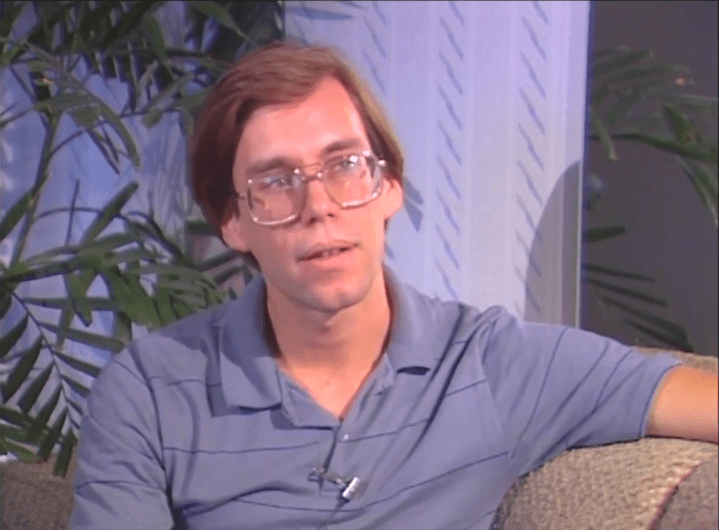
The following is Lazar’s detailed testimony, shared across several interviews.
On June 28, 1982, Lazar met Dr. Edward Teller, the father of the hydrogen bomb and an alleged member of MJ-12, during a seminar. Teller was one of several individuals to whom Lazar sent his resume in 1988. He referred Lazar to EG&G, a prominent defense contractor. Lazar then began a series of interviews and was considered to replace a physicist who was leaving the organization, though no further details were provided.
Following the suspension of his Top Secret Q clearance after leaving Los Alamos, Lazar’s clearance was reinstated, which led to a more in-depth background investigation. He was eventually granted a security clearance thirty-eight levels higher than the Q clearance and began his work at Groom Lake, specifically at an installation known as S-4.
Each time he was to go to work, Lazar was contacted by phone and instructed to go to McCarran Airport to board a Boeing 737. Upon arriving at Groom Lake, he and others were transported by bus with blacked-out windows along a dirt road to a location about 10 miles south. They reached the S-4 facility, which was concealed within a mountain and camouflaged with textured paint.
The first time, Lazar was taken to an office and assigned the task of reviewing 120 briefing papers. It was here that he learned the U.S. government had acquired alien spacecraft. Among the documents were autopsy reports and black-and-white photographs depicting alien bodies, the typical “greys.”
Lazar was then led into a hangar where he saw a metallic disc, approximately 30 to 35 feet in diameter and 15 feet high, resting on the ground. He referred to it as the “sport model.” The craft appeared to be made from a single piece of sheet metal, with small square portholes at the top. Lazar was allowed to enter. Inside, he observed a central column, archways along the inner walls, some chairs, and a console.
What struck him most was the lack of sharp edges—everything seemed to be molded as if cast from a single piece, almost as if made from wax. The most bizarre feature, however, was the furniture, particularly the chairs, which appeared to be designed for small children. Lazar became convinced that the craft was not of human origin.
The craft’s power was generated by an antimatter reactor about the size of a basketball. This reactor produced a gravity field, fueled by a substance called Element 115. On the periodic table, Element 115 would be positioned at number 115, with a specific combination of protons and neutrons. When bombarded with protons, it discharged antimatter. Notably, Element 115 does not exist naturally on Earth and cannot be synthesized with current technology.
At the bottom of the craft, three gravity amplifiers were positioned to focus the gravity generators toward a specific point chosen by the pilots. According to Lazar, movement through space was not linear but instead involved warping space and time, following the natural curvature of space as it contracts. Time itself was effectively “turned off” during this process. This, Lazar explained, could account for phenomena such as UFOs making sharp 90-degree turns at incredible speeds—what observers perceive as abrupt movement is actually the result of time distortion.
The objective of the project was to replicate the reactor using terrestrial materials, a task Lazar believed to be impossible. Reportedly, in May 1987, three scientists working on the craft lost their lives during an experiment when they attempted to open the reactor while it was still operational.
Lazar claimed to have seen nine different crafts in the hangars at S-4, about half of which were operational. He also witnessed a test flight of the craft he was assigned to study. One evening at dusk, the craft was brought outside. Standing nearby was a man holding a radio, communicating with the pilots inside the disc. The craft lifted off quietly, emitting only a faint hiss, while its underside glowed blue. It ascended to an altitude of about 20 to 30 feet, hovered momentarily, and then descended smoothly back to the ground.

During his initial interview in March 1989, Bob Lazar was asked about the presence of aliens at S-4. He responded cautiously, saying, “Er, I really want to steer away from that right now.” However, in a later interview with George Knapp, when pressed on the topic, Lazar recounted that he may have witnessed a live alien.
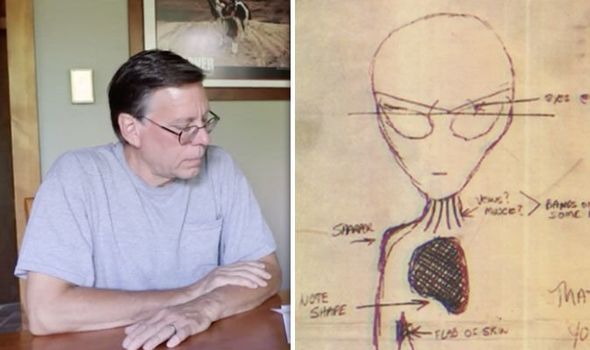
“One day, as I was walking down a hallway, I noticed the doors leading to the hangars were smaller than the ones in the corridors. Each had a 9-inch square window with thin wires running through it, positioned just above head level. As I was walking by, I just glanced in and I noticed – at a quick glance – there were two guys in white lab coats, facing me towards the door. They were looking down and talking to something small with long arms. I was just surprised as I walked by, and I only caught a glimpse. I don’t know what on earth that was.”
According to anonymous military sources known as “Condor” and ‘Falcon,” who appeared in the 1988 documentary UFO Cover-Up? Live, extraterrestrials were present at Area 51 and controlling its operations.
The briefing papers Lazar was required to review contained detailed information about non-human entities and associated projects. Among them, “Galileo” focused on the flight operations of the craft, while “Looking Glass” aimed to explore the possibility of viewing events from the past. “Sidekick” was dedicated to the development of advanced beam weapon technologies. All these initiatives were managed under the overarching framework of “Projects Overview.”
The aliens were colloquially referred to as “the kids”. According to the briefing papers, their origin was identified as Reticulum 4, the fourth planet orbiting Zeta Reticuli 2, a binary star system located approximately 37 light-years from Earth. The documents described how contact had been established and a collaborative relationship initiated. The Greys worked alongside human scientists on advanced scientific and technological projects. However, the partnership came to a halt following an incident in 1979. In a secret facility, during a joint operation, the Greys requested that security personnel lower their weapons , citing a hazardous risk that bullets could detonate within a specific field. One guard, ignoring the warning, opened fire. The Greys retaliated, leading to a violent confrontation in which many lives were lost.
The briefing papers detailed how the evolution of humanity had been altered through genetic “corrections” made by the aliens. According to the documents, the Greys viewed humans as “containers” for souls. Religions were created to regulate human society, with the ultimate goal of preserving these vessels. Furthermore, figures considered to be religious prophets, such as Jesus, were said to have been deliberately engineered.
Eventually, Lazar found it increasingly difficult to keep his experience to himself. He knew the time and location of the test flights, which occurred every Wednesday night at 9:00 PM. This was later confirmed by five witnesses Lazar brought to the edge of the base over the course of three nights. Among the witnesses was John Lear, who managed to observe the UFOs through a telescope. On the night of April 6, 1989, they were caught by security guards and the Lincoln County Sheriff. Although they were released, the following day Lazar was summoned to the security center at Area 51. There, he was debriefed and threatened with a gun at point-blank range. Despite being called back to work, Lazar refused, fearing that he could easily be killed in some remote location in the desert. In order to protect himself, he decided to go public with his story.
George Knapp launched an investigation to corroborate Lazar’s testimony, gathering accounts from two dozen sources within Area 51, each providing varying degrees of support for his claims. He held secret meetings with a high-ranking individual who had been involved in Groom Lake operations from the outset, and who confirmed the existence of reverse engineering programs conducted at the site. The individual also acknowledged the presence of a live alien being held there.
Several witnesses were approached and threatened just hours after agreeing to an interview. As a result, each of them declined to be recorded on video, citing concerns for their safety. Knapp also spoke with a technician in a sensitive position, who confirmed that “it is common knowledge among those with high security clearances that recovered alien discs are stored at the Nevada Test Site.” Additionally, a former military personnel stationed at Area 51 inadvertently witnessed a flying disc landing. He was apprehended by security and subjected to an extensive debriefing.
An individual identifying himself as “Yellow Fruit” called in during a radio show on KVEG in Las Vegas, claiming that during his assignment as a security officer at Area 51, he became aware of an underground complex housing covert activities related to extraterrestrials. In a meeting with William F. Hamilton, Director of the UFO Research Center for ET Studies, at Rachel’s Bar & Grill (now known as the Little A’Le Inn) near the test site, he revealed that a group of small gray aliens, referred to as EBEs, operated within the underground base.
George Knapp spoke with a former employee of the military contractor Holmes and Narver, who shared that she had participated in discussions about crashed UFOs, extraterrestrials, and their technology. She revealed to him that extraterrestrial hardware had been transferred from Wright-Patterson AFB to Area 51. However, before she could go public, a man identifying himself as a government agent visited her home and warned her that “accidents can happen.” Fearing for her safety, she decided against pursuing her disclosure.
In 1967, U.S. Air Force Captain David Fruehauf joined an elite group of pilots flying the SR-71 spy plane. He was later assigned to Area 51, where he served for six years, from 1979 to 1985. In an interview for an episode of Ancient Aliens, Fruehauf’s testimony partially corroborated Lazar’s account. Like Lazar, he boarded a plane at McCarran Airport in Las Vegas on a mysterious carrier known as Janet Airlines. A select group of scientists and military personnel would board the plane and, upon landing at Area 51, be transported by bus to a secret facility codenamed S-4. Fruehauf never learned the specifics of the activities at S-4. However, years later, after hearing Lazar’s story, he realized that the description of the journey from McCarran to S-4 matched his own experience in every detail. He added, “I know people who worked for me, and after I left there, they admitted to having seen Bob Lazar there recently.”
In 2001, at the International UFO Congress in Australia, former USAF Lt. Colonel Wendelle Stevens presented the findings of a decade-long investigation into the testimony of a whistleblower named Derek Hennessy, who used the pseudonym Connor O’Ryan. Hennessy’s interviews were recorded in 1991 and released in 2009. According to several documents he provided, O’Ryan was a Navy SEAL who claimed to have carried out assassinations for the CIA in the 1980s, with some of his targets reportedly including U.S. citizens. Stevens was able to verify Hennessy’s military ID and confirm his role as a CIA operative involved in covert missions.
In 1991, Hennessy was assigned to a secret facility known as S-4, located in a remote part of Area 51. The installation employed around 75 personnel and had four levels. Hennessy worked on level 2 but was never granted access to levels 3 and 4. His mission was to guard the elevators, which required three keys, a thumbprint, and a retinal scan for access. A hangar on level 2 housed seven flying saucers, which were occasionally brought to the surface for flight testing when no foreign spy satellites were overhead. Additionally, seven alien bodies, described as Greys, were preserved in tubes filled with liquid. In April 1991, Dick Cheney, then Secretary of Defense, visited the facility. Accompanied by three officials, he observed the flying saucers and the extraterrestrial bodies. A July 13, 2009, New York Times article later alleged that the CIA, under Cheney’s orders, had used U.S. military special forces to assassinate foreign terrorists without Congressional authorization. Wendelle Stevens passed away shortly thereafter.
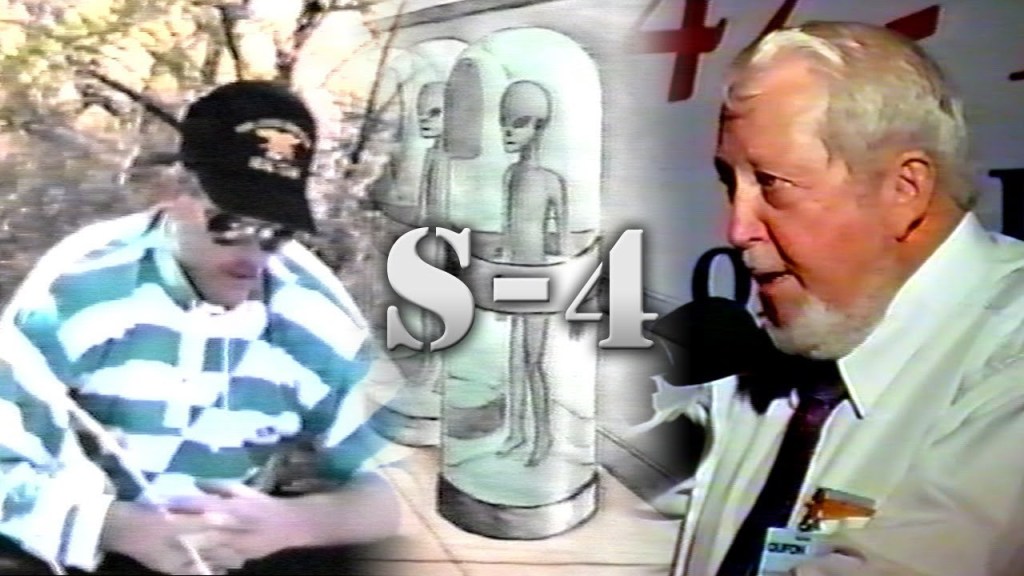
Bill Uhouse, a former member of the Marine Corps and Air Force, served as a mechanical engineer, fighter pilot, and experimental aircraft flight tester. In the mid-1960s, he was stationed at Area 51, where he reportedly participated in a classified program to develop a flight simulator for flying saucers, designed to train test pilots in their operation. He claimed that the program was a result of the 1953 UFO crash in Kingman, after which the extraterrestrial craft was taken to Area 51. Uhouse worked on flight decks and instruments, and recounted that he was assisted by an extraterrestrial survivor of the Kingman crash, known as J-Rod. This entity provided engineering and scientific advice while being housed in a special underground chamber at Area 51. The simulator featured six capacitors, each charged with a million volts, creating a gravitational field that allowed the craft to lift off and maneuver laterally. Its design did not accommodate the integration of external weaponry, unlike conventional aircraft.
Another whistleblower, Dan Burisch, a microbiologist, claimed that he was hired to work at Area 51 to provide medical care for J-Rod and ensure his health was maintained. According to his account, he also participated in a secret project to clone alien viruses.
David Adair, a Space Technology Transfer consultant, U.S. Navy jet engine technician, and field researcher for the Office of Naval Intelligence, claims he was taken on a one-day visit to an underground facility at Area 51. In the 1960s, at a young age, he independently designed propulsion systems and developed a rocket featuring a fusion containment drive. Through his mother, he met a U.S. Air Force General who subsequently funded his projects , leading to successful launches at White Sands.
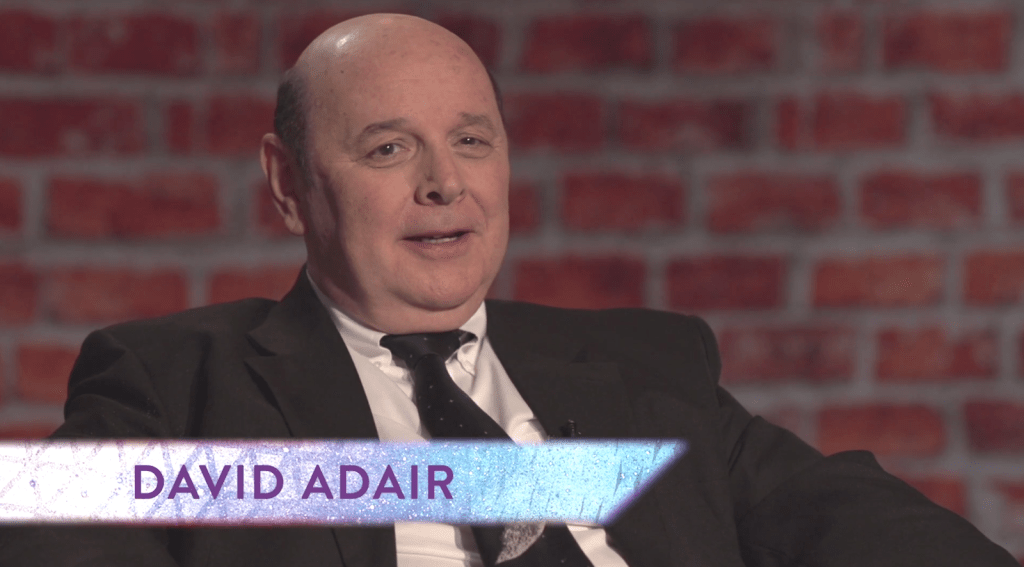
In 1971, a man named Arthur Rudolph, a former Nazi rocket scientist brought to the U.S., took control of the project. Adair’s rocket was transported to Groom Lake, where he was ordered to board a plane. Upon arrival at a large Air Force base, he was told by Rudolph and other Air Force personnel that they needed to show him something. They led him to a hangar, and the entire floor descended like an elevator, revealing a vast cavern that appeared to have been artificially hollowed out. Adair asked, “What did you do with all the dirt?” They replied, “You don’t need to worry about that.” They then boarded a golf cart, passing shops, offices, and hangar bays. Inside some of these hangars, Adair saw aircraft that resembled large teardrops with landing legs, and another that was shaped like a massive arrowhead.
They arrived at a room the size of a gymnasium, at the far end of which was a raised platform. On the platform sat an electromagnetic fusion containment engine, over 60 feet long and approximately 15 feet tall. Its shape was similar to Adair’s own design, but it was far more sophisticated. Adair described it as resembling two octopuses, their tentacle-like arms twisted together and convoluted into two spheres that appeared organic, almost flesh-like. It seemed to be a living machine. When he placed his hand on it, a blue-white wave radiated across the surface, dissipating when he withdrew his hand. Adair began asking questions about its origin—whether it had been shot down or excavated. Believing that the technology was being concealed and not shared, he started to grow angry. In response, the device suddenly lit up with a fiery glow, as though reacting to his emotions. The group then left the area, riding off in the golf cart.
For an episode of Ancient Aliens, Giorgio Tsoukalos met with UFO researcher Wolf McCarron and mining expert Christian Gronau on March 17, 2018, in Rachel, at the Tempiute Mine, to investigate a tunnel network beneath Area 51. Gronau, a miner based about 100 miles north of Area 51, explained: “What you see in Google imagery is from the ’50s, ’60s, and ’70s. Since then, they’ve gone underground—everything they do is now below the surface.” Tsoukalos asked, “What evidence have you encountered as a miner that supports your theory?” Gronau responded, “If they’re going underground, where is all the dirt going? Well, it’s going to the nearby mines, where it’s dumped into huge piles and subjected to heap leaching.” Heap leaching involves the use of hoses to pump mercury and cyanide through the mountains of dirt, breaking it down. Gronau also revealed that the military often pays miners to keep quiet. “It’s kind of like hush money,” he said, “I’ve seen it and dealt with it numerous times.”
According to multiple sources, the underground operations at Area 51 represent just the tip of a massive iceberg. Beneath the surface lies an extensive network of deep underground military bases across the United States, all interconnected by high-speed underground train systems.
If you’re interested in learning more about Area 51 and, specifically, Lazar’s testimony, I recommend watching the Netflix documentary Bob Lazar: Area 51 and Flying Saucers, directed by Jeremy Corbell.
 UFO INDIGO