
Since the 1960s, reports of alien abductions have shaped a controversial field of inquiry within ufology. Accounts have persisted for decades, evolving from isolated testimonies to complex narratives involving hybrid beings, military involvement, covert collaborations, and multidimensional realities. Drawing on the work of researchers and experiencers, this article explores the main patterns and interpretations surrounding the phenomenon.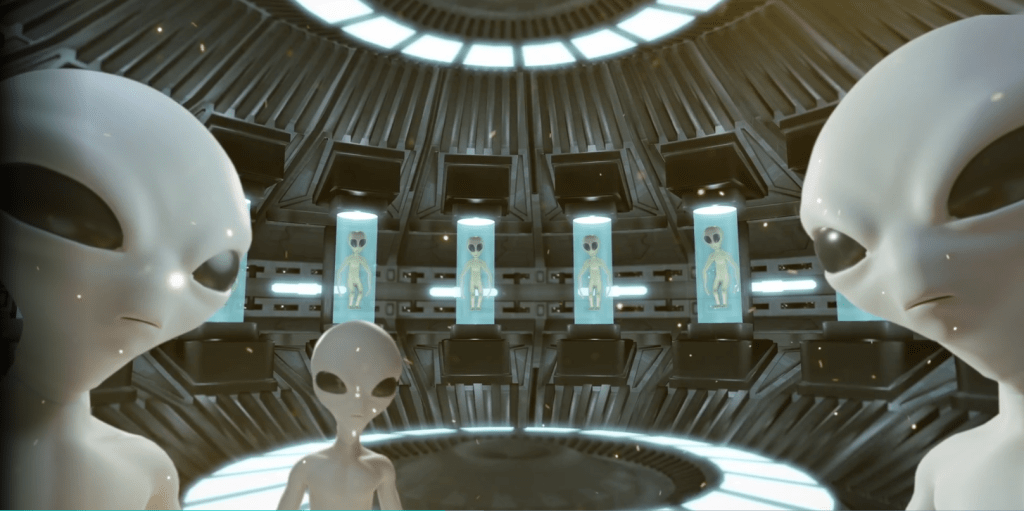
Harvard psychiatrist Dr. John Mack characterized alien abduction as a phenomenon in which individuals report being taken—often involuntarily—by non-human entities into enclosed spaces, where they undergo various procedures and engage in forms of communication. These events are commonly classified as “close encounters of the fourth kind” (CE4), according to Jacques Vallée’s extension of J. Allen Hynek’s classification system.
It is important to distinguish abduction experiences from the accounts of extraterrestrial contactees, a phenomenon that gained attention in the 1950s, with notable cases such as George Adamski, George Van Tassel, and Howard Menger. Contactee narratives typically involve benevolent, humanoid extraterrestrials—such as Pleiadians or members of the Ashtar Command—who are portrayed as guiding or aiding humanity. In contrast, abductee accounts often describe experiences that are distressing or traumatic, although it is not uncommon for the tone of such encounters to shift toward a more positive interpretation over time.
Individuals who report abduction experiences frequently exhibit symptoms consistent with Post-Traumatic Stress Disorder (PTSD), suggesting that the phenomenon has a psychological and physiological reality for those affected. This trauma is frequently exacerbated by the social stigma surrounding the topic, which can make it difficult for experiencers to discuss their encounters, even with close family members.
Some studies estimate that up to four million individuals in the United States may have undergone an abduction experience. Given that only 20 to 25 percent of abductees reportedly retain conscious memories of the event, the actual number may be significantly higher. Furthermore, contrary to popular belief, alien abduction reports are not confined to the United States; similar accounts have been documented globally.
The first widely publicized and studied case of alien abduction was that of Betty and Barney Hill, an American couple who reported being taken by extraterrestrials on the night of September 19–20, 1961, in rural New Hampshire. While returning to Portsmouth from a trip to Niagara Falls and Montreal, they noticed a bright, erratically moving light in the sky near Lancaster. After stopping near Twin Mountain to investigate and walk their dog, Betty observed a flashing, multicolored object through binoculars. As they continued driving, the object appeared to follow them and descended near their car, prompting Barney to stop and approach it. He saw several humanoid figures inside the silent, windowed craft before experiencing memory loss. Both later recalled hearing a beeping sound, entering a trance-like state, and regaining awareness outside Concord. They arrived home at 5 a.m., seven hours after leaving Colebrook, with no clear memory of the intervening time.
During subsequent interviews with researchers, Betty and Barney Hill were unable to account for approximately 35 miles traveled along U.S. Route 3 between Lincoln (near Indian Head) and Ashland, New Hampshire. In the field of ufology, such an unexplained lapse in memory is commonly referred to as “missing time.” The Hills eventually shared their experience during a church gathering, where they encountered Captain Ben H. Swett of the United States Air Force. He recommended they consider undergoing hypnotic regression to recover potential repressed memories.

In the following months, the Hills began sessions with Dr. Benjamin Simon, a prominent psychiatrist and expert in hypnotherapy. Conducted separately, the sessions revealed strikingly similar recollections: the Hills described being removed from their vehicle by several non-human, humanoid beings and led aboard a spacecraft via a ramp. Once inside, they were placed on metallic examination tables and subjected to a series of medical procedures. Biological samples—including hair, nails, and skin—were collected. Additional procedures involved needle insertions, including one in Betty’s abdomen resembling an amniocentesis, while Barney believed a semen sample had been extracted.
Both described the beings as having grayish skin, large foreheads, and prominent eyes. Betty recalled communicating telepathically with a figure she identified as the leader. When she inquired about the beings’ origin, he showed her a star map with various stars interconnected by lines and responded that she would not remember the information. The Hills’ account was later detailed by journalist John G. Fuller in his 1966 book The Interrupted Journey.
The case of Betty and Barney Hill was not an isolated incident, yet the phenomenon of alien abduction did not receive significant attention within the ufological community until the 1980s. A pivotal figure in bringing this issue to the forefront was Budd Hopkins, a New York-based artist who conducted his first UFO investigation in 1975. This case involved an alleged UFO landing and encounter with its occupants in North Hudson Park, New Jersey. Soon thereafter, Hopkins shifted the focus of his research entirely to the study of alien abductions.
In 1981, Hopkins published Missing Time: A Documented Study of UFO Abductions, which marked a turning point by presenting abduction phenomena as a legitimate subject of investigation. He pioneered systematic methodologies for abduction research and worked with over a thousand individuals from diverse social and professional backgrounds, including physicians, attorneys, law enforcement officers, military personnel, political figures, celebrities, and even a NASA scientist. While he initially collaborated with certified hypnotherapists, Hopkins eventually became highly skilled in conducting hypnotic regression sessions himself.
Hopkins sought to analyze a wide range of abduction accounts to identify recurring patterns. His research revealed that abductions were rarely isolated events. Instead, they often began in early childhood and continued throughout an individual’s life. He also discovered that entire families were frequently involved, with incidents recurring across multiple generations. One of the central themes that emerged from his work was the hypothesis of genetic experimentation. Hopkins was the first to propose that abductees were being used in a long-term hybridization program, which involved sperm and egg extraction, artificial insemination, and the creation of human-alien hybrid offspring. He characterized this as a covert and systematic operation that had been ongoing for at least half a century.
Hopkins expanded on these ideas in his 1987 publication Intruders. That same year, Whitley Strieber—a successful novelist—released Communion, one of the most influential accounts on alien abduction. Strieber described his own experience of being abducted by non-human entities from his remote cabin in upstate New York on December 26, 1985, further intensifying public interest in the phenomenon.

Concurrently, other researchers also began to investigate the alien abduction phenomenon. Among them was Thomas E. Bullard, a scholar specializing in folklore. Although more cautious in his conclusions than figures such as Budd Hopkins and Whitley Strieber, Bullard identified striking consistencies across a wide range of abduction reports. These accounts, gathered over many years and from diverse cultural and national contexts, as well as across various social strata, revealed a recurring narrative structure. Bullard observed that the majority of abduction experiences adhered to a specific and consistent sequence of events.
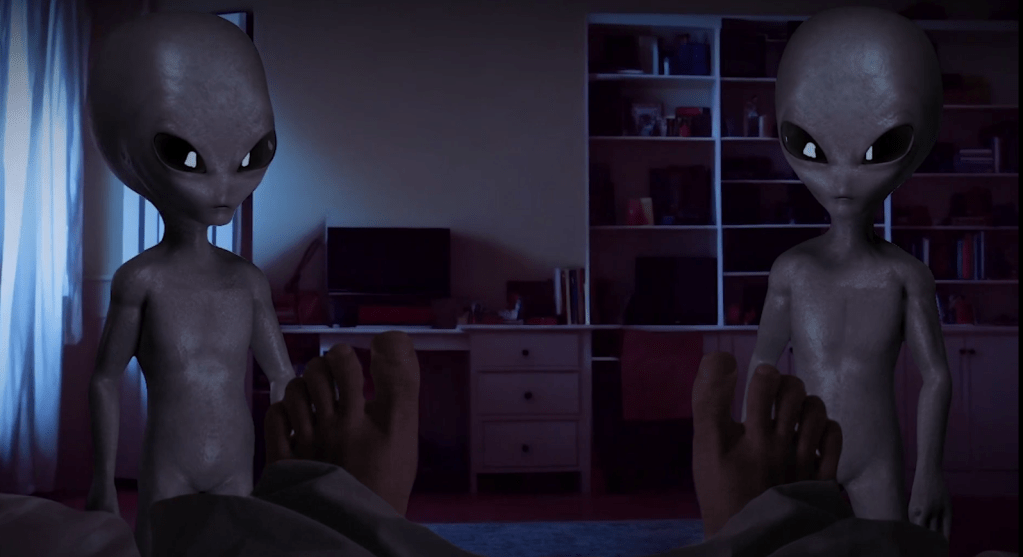
1. Capture: The abduction experience typically begins with the individual being taken involuntarily from their environment and transported aboard an extraterrestrial craft. This event may occur under various circumstances—during daylight hours, in conjunction with a UFO sighting, or while the individual is engaged in routine activities such as driving. However, the majority of reported captures take place at night, often while the subject is in bed. In many accounts, the individual awakens with a sense of an unseen presence, followed by the appearance of non-human entities. At this stage, witnesses frequently report a sudden loss of voluntary motor control, often described as a state of paralysis that renders them incapable of movement unless expressly permitted. In numerous cases, abductees describe being guided through solid physical barriers—such as walls, doors, or ceilings—with ease, as if seamlessly phasing into the waiting craft.
2. Examination: Following the initial capture, the abductee is subjected to a series of intrusive medical or scientific procedures aboard the craft. The entities conducting these examinations are most frequently described as small humanoid figures, typically less than four feet in height, with gray skin, disproportionately large bald heads, large black eyes, minimal nasal structure, and a narrow slit-like mouth. Commonly referred to as “Greys,” these beings have become iconic within popular culture—not as a result of media invention, but rather as a consistent archetype emerging from abduction testimonies. In many reports, the examination is overseen by a more authoritative figure, which may appear as a taller Grey, an insectoid entity resembling a praying mantis, or a reptilian being. The procedures themselves often involve neurological interventions, as well as reproductive, gynecological, and urological examinations, along with various other physical operations whose purposes remain largely unexplained.
3. Conference: At some point during the abduction experience, communication between the non-human entities and the abductee typically occurs. This interaction is almost invariably described as taking place through telepathic means, rather than spoken language. The content of these communications is frequently centered on ecological or existential themes. Abductees often report being shown vivid images of catastrophic future events—such as nuclear warfare, widespread environmental collapse, or global natural disasters.
4. Tour: In some abduction accounts, the experiencer is escorted through various areas of the spacecraft. This segment of the encounter, though not universally reported, involves the abductee being shown specific sections or features of the interior environment, sometimes including the craft’s control room or technical components.
5. Loss of Time: A hallmark of the abduction experience is the presence of significant memory gaps concerning the event itself. Abductees frequently report an inability to recall substantial portions of the encounter, often becoming aware of the experience only through fragmented memories, physical anomalies, or through the process of hypnotic regression. This phenomenon—commonly referred to as “missing time”—suggests that some form of memory suppression or neurological intervention may be involved in the experience.
6. Return : The abduction experiences typically concludes with the individual being returned to Earth. In some cases, the abductee is found in a different location from where the initial disappearance occurred, often with no recollection of how they arrived there. Upon return, many report physical anomalies such as unexplained injuries, scars, bruises, or bodily markings—frequently in geometric patterns—as well as signs of disheveled or reversed clothing.
7. Theophany: In the aftermath of the abduction experience, some individuals report undergoing a profound spiritual or mystical transformation. This stage, often occurring days, weeks, or even months after the initial event, is characterized by a heightened sense of purpose, expanded consciousness, or a deeply felt connection to the universe or a higher intelligence. Such experiences are frequently interpreted by the abductees as revelatory or transcendent, marking a significant shift in their personal worldview and existential understanding.
8. Aftermath : Following the abduction experiences, many individuals report a range of psychological and social consequences. These often resemble symptoms associated with Post-Traumatic Stress Disorder (PTSD)
In a subset of abduction cases, individuals report the presence of anomalous implants, typically described as small devices inserted into various parts of the body—most commonly the sinus cavity, behind the eyes, or in other soft tissues. These objects are believed by some researchers to function as tracking or data-gathering devices, analogous to those used by human scientists for monitoring wildlife.
Dr. Roger Leir, an American surgeon, conducted over fifteen surgical procedures in which he extracted a total of sixteen such implants. The recovered materials were subsequently analyzed by multiple independent laboratories, including the highly regarded Los Alamos National Laboratory. On April 20, 2009, Dr. Leir and Dr. Alex Mosier, a physical chemist, publicly presented their findings at the National Press Club in Washington, D.C. The extracted implants were metallic in nature, measuring between several millimeters and one centimeter in length. Their composition was consistent with certain types of meteorite fragments, containing rare elements such as gallium, germanium, platinum, ruthenium, rhodium, and iridium. Notably, the nickel present within the implants displayed an isotopic ratio not found in terrestrial materials, suggesting an origin beyond Earth. Furthermore, the presence of carbon nanotube structures indicated artificial fabrication. Laboratory analysis also revealed that some of the implants emitted a consistent radio frequency signal of 14.7 MHz, further supporting the hypothesis of intentional design and technological functionality.
In the early 1990s, Dr. John E. Mack, a professor of psychiatry at Harvard University and recipient of the Pulitzer Prize, began an in-depth investigation into the alien abduction phenomenon. As a trained psychiatrist, Mack initially approached the subject with clinical rigor and found that the majority of individuals reporting abduction experiences did not exhibit symptoms of mental illness. Rather, he concluded that these individuals had undergone events of profound psychological and existential significance—experiences that, while not fully understood, appeared to be real in their impact.
Mack diverged from the more trauma-focused approaches of earlier researchers, offering a comparatively optimistic interpretation. He observed that many abductees described their experiences as transformative, often leading to spiritual awakenings, heightened ecological awareness, and a deeper sense of interconnectedness. Mack hypothesized that the phenomenon might serve a beneficial function, potentially fostering a shift in human consciousness necessary for the preservation of life on Earth. Importantly, he did not claim that the beings were extraterrestrial in the conventional sense. Instead, he proposed that they originated from a dimension or reality beyond current scientific understanding.
Drawing parallels with visionary traditions from various cultures—such as the vision quests of Indigenous North American peoples—Mack contextualized abduction phenomena within a broader framework of spiritual and altered-state experiences. He regarded the encounters not solely as physical events, but as metaphysical or interdimensional in nature. Mack was a pioneer in advancing a non-materialist framework for interpreting the abduction phenomenon. Subsequent proponents of the spiritualist perspective have further developed this view by drawing parallels between abduction experiences and shamanic journeys, including those induced by psychoactive substances such as DMT.

Another prominent researcher investigating the abduction phenomenon since the early 1990s is David Jacobs, a historian at Temple University. In his works Secret Life (1992) and The Threat (1998), Jacobs explores the concept of hybridization, which he argues lies at the core of many abduction experiences. Based on hundreds of hypnotic regression sessions, Jacobs identifies distinct stages of the hybridization process.
A significant element in many abduction accounts is the extraction of sperm from men and eggs from women, seemingly for the purpose of in vitro fertilization. Jacobs documents numerous cases where women report becoming pregnant after an abduction, only to experience a miscarriage, with the fetus mysteriously disappearing. Hypnotic regression sessions reveal that the Greys, the beings typically associated with the abduction phenomenon, perform the extraction of the fetus, which is then stored in tanks filled with a liquid medium. Abductees frequently describe encountering rooms—ranging in size from small spaces to vast chambers—containing hundreds, or even thousands, of incubation tanks housing developing fetuses.
In these scenarios, when the infants are removed from the tanks, they are often presented to the abductees, with the Greys requesting that the mothers care for the children. The infants, however, are typically described as apathetic, sickly, or otherwise lacking vitality. Jacobs outlines several stages of hybrid development, from entities displaying a blend of human and grey features to those that appear entirely human.
In Walking Among Us (2015), Jacobs expands on his previous work by describing how the Greys utilize abductees to help human-looking adult hybrids integrate into human society. Jacobs posits that the ultimate goal of the hybridization program is the creation of a new species that will gradually replace humanity, claiming, “We have been invaded. This is not an occupation, but it is an invasion. At present, we can do little or nothing to stop it.”

Former intelligence operatives turned UFO researchers, Bill Cooper and John Lear, have put forward claims regarding a covert agreement between the U.S. government and extraterrestrial entities. According to their accounts, a secret committee known as MJ-12— established by President Harry Truman to manage the extraterrestrial issue—entered into a treaty with a group of grey aliens. In exchange for access to advanced technologies, they granted these beings permission to abduct human subjects.
A recurring theme in abduction testimonies is the presence of human military personnel working in conjunction with extraterrestrials. Jim Sparks, an abductee who collaborated with Harvard psychiatrist John Mack in the 1990s, described multiple encounters where he witnessed Greys cooperating with military officials from a wide range of nations, including the United States, Europe, Asia, Africa, and Latin America. During one such incident, a high-ranking American officer told Sparks, “What we are doing is extremely important, son,” suggesting an organized and international collaboration between extraterrestrials and human power structures.
Similar claims have been made by other researchers and experiencers. Italian UFO researcher Corrado Malanga, for example, worked with abductees in Italy who alleged that they had seen French military personnel operating alongside non-human entities. Likewise, Kim Carlsberg, a professional photographer and author of Beyond My Wildest Dreams: Diary of a UFO Abductee (1995), recounted an experience in which she regained consciousness on a gurney being pushed by a woman in military attire. She described being taken into a large room filled with activity, where both extraterrestrials and human military personnel were working side by side at consoles and control panels.
During the 1990s, researchers such as Dr. Helmut Lammer of the Austrian Space Research Institute began documenting accounts of abductions conducted by humans in military uniforms. This phenomenon, now commonly referred to as MILABs (Military Abductions), often affects individuals who also report prior encounters with extraterrestrial entities. Reports frequently include accounts of dark, unmarked helicopters hovering above the residences of alleged abductees, as well as suspicious vehicles such as vans parked nearby. Victims of MILABs often describe being transported to clandestine locations, including underground military installations, where further procedures are carried out. The military personnel involved appear to employ technology similar to that of the Greys to conduct the abduction of their victims.
This controversial subject gained greater visibility within the ufological community through the work of Karla Turner. In her 1994 book Taken: Inside the Alien-Human Abduction Agenda, Turner presented a number of detailed testimonies involving abductions by military units. Notably, some of these abductees claimed to have received threats directed at Turner herself. In early 1995, Turner was diagnosed with an aggressive form of cancer and died the following year, prompting speculation among some in the UFO community that her illness may have been induced by a targeted bioweapon.
More recent claims suggest that joint human military-extraterrestrial operations may involve the genetic modification of human embryos. According to such accounts, women are abducted and subjected to reproductive procedures, after which their hybrid offspring are abducted again during childhood and placed into specialized training programs, to be utilized as assets in a clandestine secret space program.
To learn more about the secret space program, consider reading the following article: Exploring The Hidden World of Secret Space Programs and Extraterrestrial Technology.
In The New Human (2016), Mary Rodwell documents numerous cases involving children who report being taken aboard extraterrestrial spacecraft. From a very young age, many of these children—a new generation of “starseeds” or “star children”—claim to recall past lives on other planets. Born from the mid-2000s onward, they frequently exhibit unusually advanced cognitive, spiritual, and metaphysical abilities, including:
- Exceptional intelligence
- Recollection of past lives
- Telepathic communication
- Precognitive insight
- Out-of-body experiences
- Interaction with non-physical entities
- Telekinesis
- Perception of energetic fields and auras
- Healing capabilities
- Fluency in non-human languages
- Intuitive or “clear knowing” faculties
- And other extraordinary traits
Although these encounters share structural similarities with traditional abduction scenarios, they are often perceived by the children and their families as positive or transformative experiences. Notably, Greys are not always present, and the nature of the contact tends to blur the boundary between the abductee and contactee paradigms. Rodwell suggests that these children are human–extraterrestrial hybrids, born of human mothers, though it remains uncertain whether they are directly connected to the Grey-related hybridization program—or if their origin stems from a broader spectrum of extraterrestrial involvement. Some sources claim that there are more than a hundred distinct species of Greys, further complicating the taxonomy of these encounters.
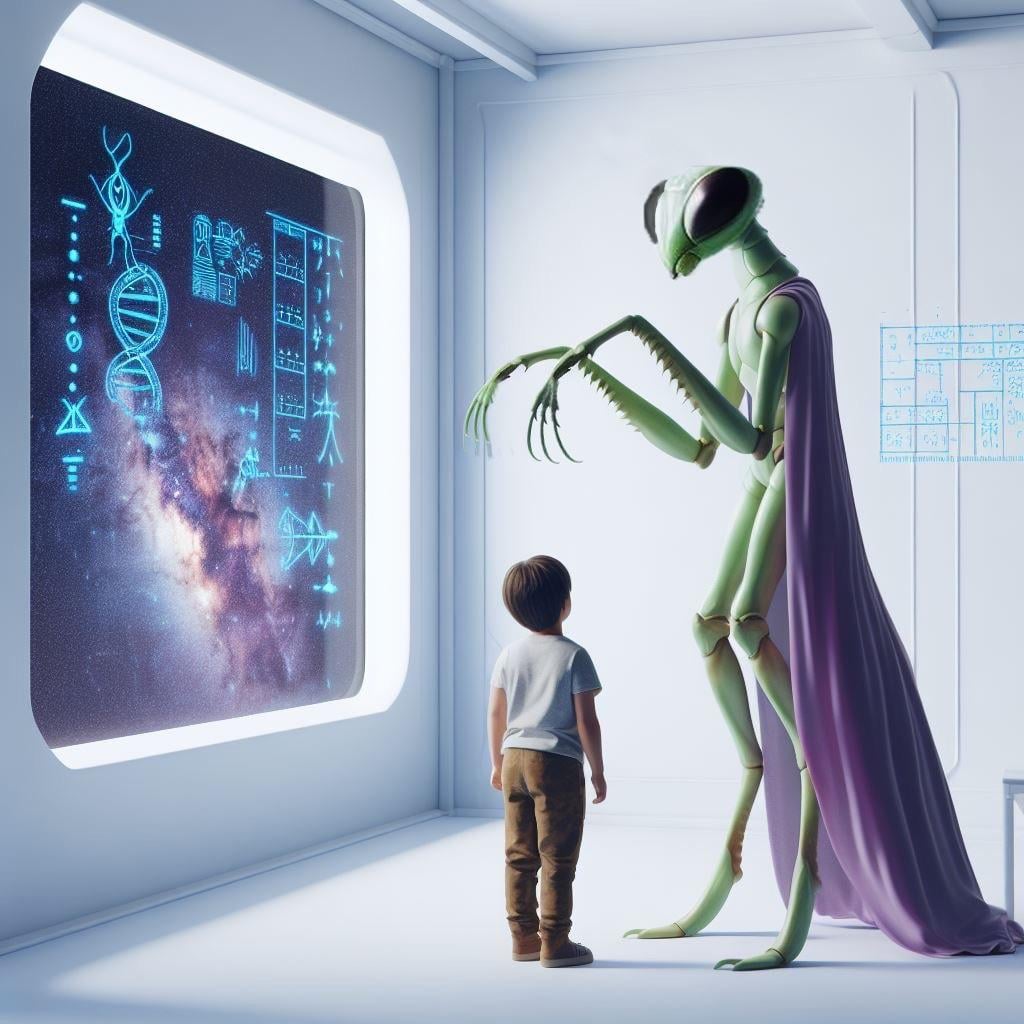
According to various ufological sources, the Greys—allegedly originating from the Orion constellation—are believed to inhabit a different plane of existence, commonly referred to as the fourth or fifth density. This ontological framework lies at the crossroads of extraterrestrial and spiritualist theories. Within this paradigm, abduction experiences are understood not as physical events in the conventional sense, but as occurrences within these higher-density realms.
If you’re interested in learning more about densities, I recommend reading this article: The Universe’s Structure and the Soul’s Journey.
The Greys’ hybridization agenda is described as multifaceted. One of the program’s principal objectives, as posited by some theorists, is the creation of human-like hybrids that would serve as intermediaries in establishing a new planetary governance structure. These hybrids are believed to be instrumental in facilitating indirect control over humanity by the Orion Greys and their allies. This theory often parallels ancient mythological narratives in which human civilizations were said to be ruled by “demigods,” with royalty later claiming divine ancestry.
From a broader perspective, the gradual integration of hybrid beings into human society is thought to disseminate Grey genetic material throughout the population, leading to a long-term transformation of the human genome. Proponents of this view argue that such genetic modification would not only alter human biology but also shift the perceptual and energetic framework—commonly referred to as the “reality matrix”—through which humans experience existence. This would enable the Greys to gain influence over Earth without violating so-called “galactic laws,” which purportedly forbid direct military conquest of worlds such as Earth.
If you’d like to explore the connection between genetics and the matrix further, I recommend reading this article: The Matrix: Consciousness, Control and Non-Human Intelligence.
A secondary rationale for the hybridization program centers on the need to restore the genetic integrity of the Greys themselves. According to this view, prolonged reliance on cloning has led to severe degradation of their DNA. Human–Grey hybrids are thus seen as viable vessels for the reincarnation of Grey consciousness.
In recent years, some contactees, notably Elena Danaan—a former French archaeologist who claims ongoing communication with benevolent extraterrestrial entities—have asserted that the Orion Greys, along with associated reptilian species and their hybrids, were expelled from Earth by a group known as the Galactic Federation in 2022.
While abduction reports have reportedly stopped, there is disagreement as to whether this decline is due to the expulsion of the Greys by external forces or simply a consequence of the successful completion of their hybridization program. Some also suggest that the existence of multiple timelines may further obscure any definitive assessment.
Below is a list of additional researchers known for their work on abduction and contact phenomena:
- Leo Sprinkle
- Eve Lorgen
- Barbara Bartholic
- Katharina Wilson
- Edith Fiore
- Raymond Szymanski
- Yvonne Smith
- Barbara Lamb
- John Carpenter
 UFO INDIGO
Leave a comment